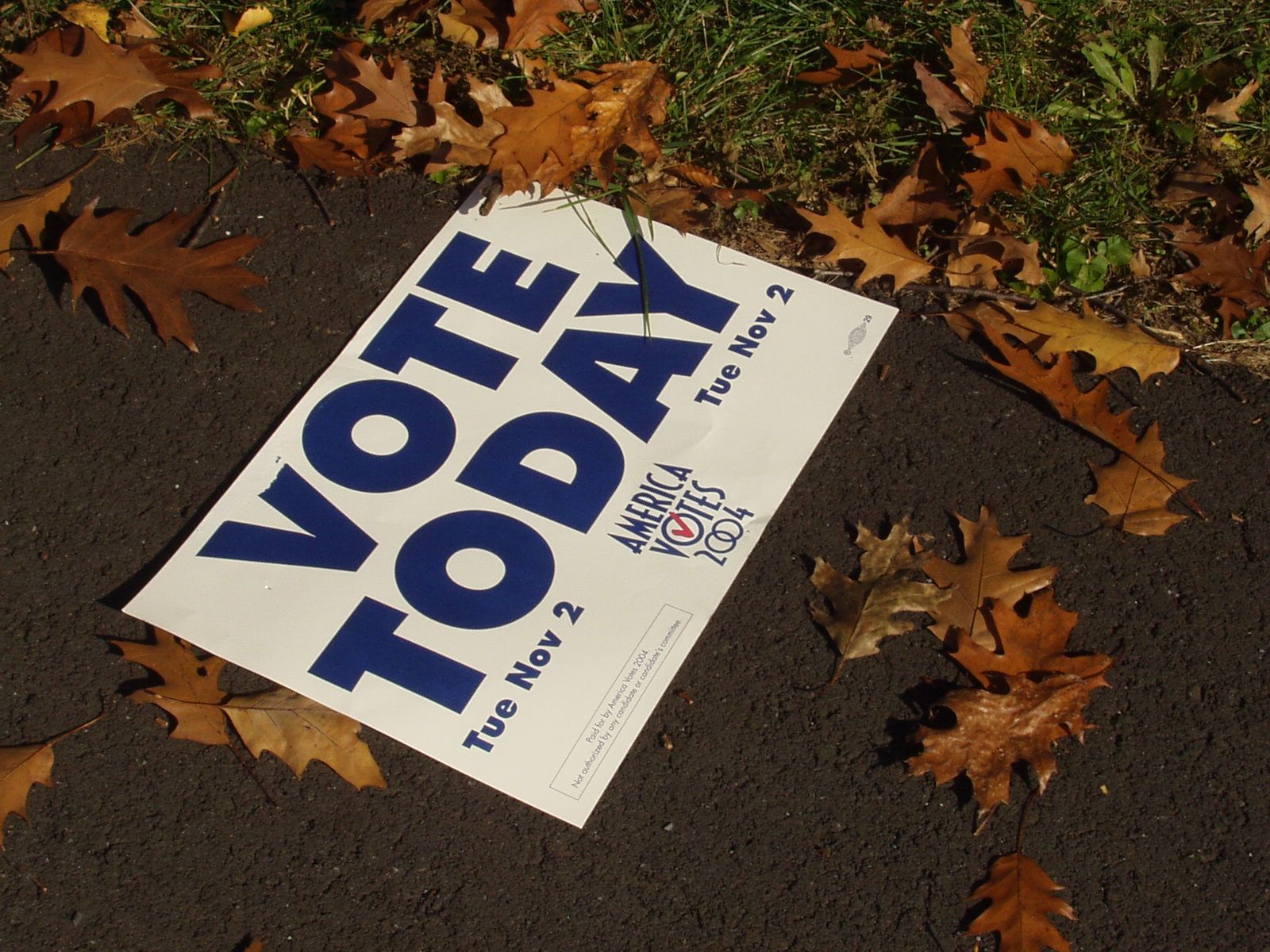
A picture of a "Vote Today" sign on a sidewalk on November 2, 2004. Photo by Ross M Karchner via Wikimedia Commons.
On July 16, 2026, President Trump gave a primetime address from the White House where he talked about how the election system in America is broken and then spent the bulk of the speech specifically focused on the 2020 election. Although I have doubts about many of his conclusions, he's almost certainly right about election tampering in 2020. But that doesn't mean he was cheated out of an election. In fact, it's almost a mathematical and human certainty that some type of cheating happened in some precincts in the presidential elections of 2024, 2016, 2012, 2008, 2004, and every other presidential election before and yet to be. And that's true for nearly every election in America. And that's the problem.
Donald Trump isn't the first president or candidate to question the validity of vote counts or an election's outcome. But it seems the actual mechanics of how we cast and count votes is so sensitive that few talk about it out loud, particularly when it comes to doubts. However quietly they mention it, other presidents have indeed said similar things. Nixon talked about how others urged him to challenge the 1960 results, particularly in Texas and Illinois, but he ultimately decided against it to avoid a constitional crisis. Mark Crispin Miller, NYU media studies professor, wrote of a conversation with a would-be president in his book Foold Again: How the Right Stole the Election and Why They'll Try to Steal It Again. Miller recounted how John Kerry, the Democratic canidate for president in 2004, agreed with Miller's assessment about the outcome being wrong during a social event not long after his defeat. But, as Miller recounted, Kerry felt pressured to concede since he would be viewed as a sore loser if he had not.
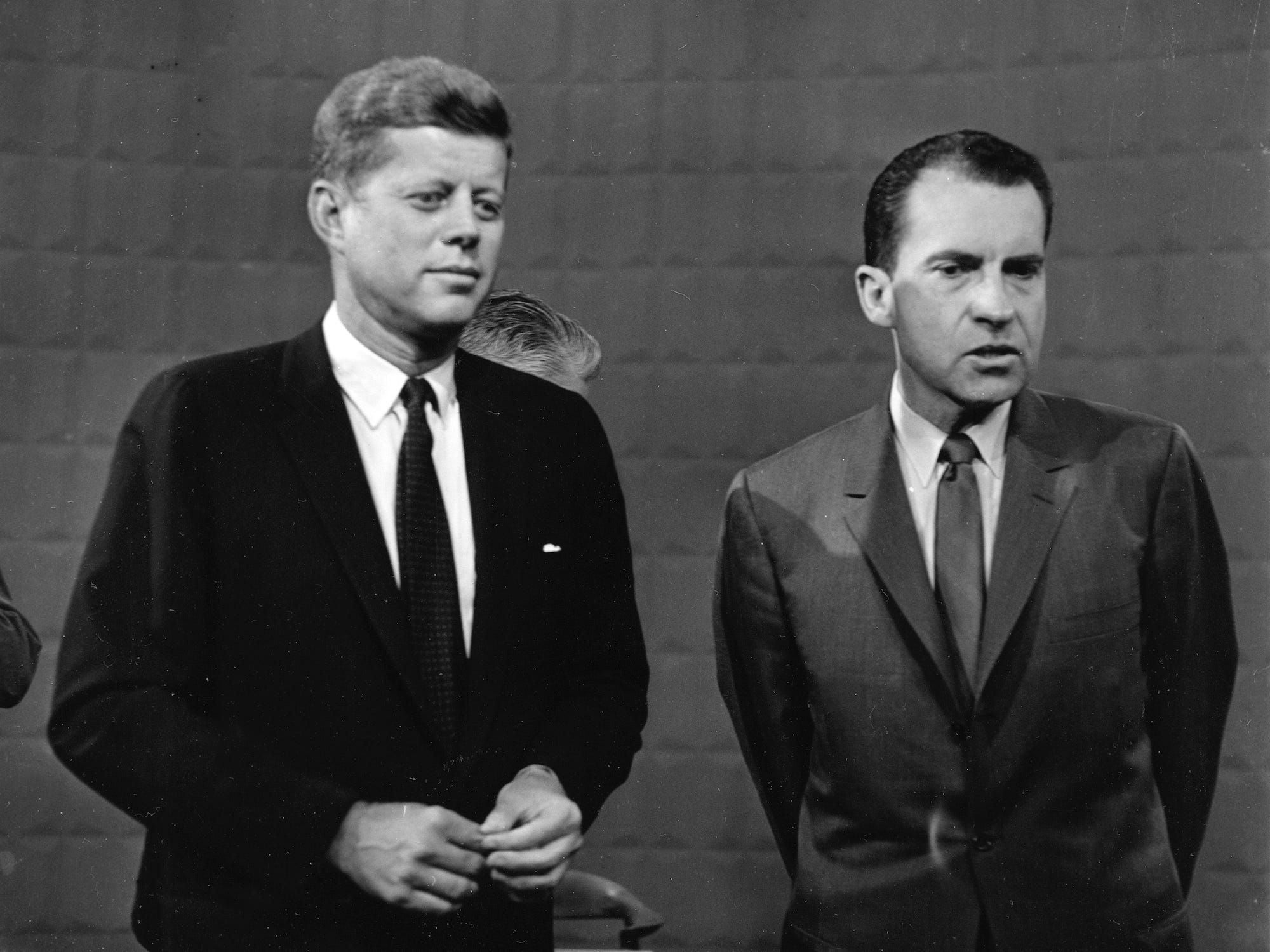
John F. Kennedy and Richard M. Nixon at the televised debate site, 1960.
But here's the thing, they're all right at some level. But the most painful thing about it is the fact that there is no way for us to ever know if whatever funny business happened in those elections actually did tip the scales or not. So the question facing us now is--how do we fix our obviously broken system so we make it where we can actually see a vote total and check it with a high level of certainty? Donald Trump, in his address to the nation would have you believe it's the SAVE Act. Its sometimes referred to as the SAVE America Act but the bill's full title is the Safeguard American Voter Eligibility Act. This bill is definitely not the way to fix America's election system. For one, it moves the power to take an individual off a voter roll in a state to a Federal Agency. If we actually believe that being a state still means something (as the Constition still states that it does), then allowing the Federal Government to get in the business of managing the voter rolls of states is just plain wrong. And there are numerous other reasons the bill should not pass that I outline in my video,"What the SAVE Act Will Do If It Becomes Law", which you can find on Plain Meaning's YouTube page.
The solution actually involves two very simple steps that nobody is talking about. First, we do away with the secret ballot. That's the most crucial thing that must be done if we truly want a verifiable election system. If we have every election where who voted and who they voted for was open for all to see, then any voter fraud committed would be clear to everyone. Likewise, it would also make it equally obvious if an election official stuffed a ballot or tossed a bag of ballots for a particular candidate in a river (as was contended by some Nixon supporters about ballots for him in the 1960 election in Illinois). The absence of votes would be glaring and noticeable by those who voted but aren't seeing their votes reported. As I pointed out in a previous article on plainmeaning.com, "Did Any of Your Votes Ever Get Counted", the secret ballot is actually a foreign import brought into America in the late 1800s and initially referred to as the Australian ballot. Many think the secret ballot is something we inherited at our nation's founding, but that's simply not true.
Germany's highest court ruled electronic voting machines unconstitutional in 2009, reasoning that if an ordinary citizen can't personally verify how their vote was counted, the process fails the basic transparency democracy requires.
As for the second part of my fix, it will make election night less exciting. But the excitement doesn't go away since it's just deferred to the next day as it requires more time for counting. And that's because what I propose we do is follow what nearly every other country holding elections does--ban digital and electronic voting. Countries like Germany and Ireland rolled back their use of electronic machines after vulnerabilities were too obvious to overlook. Many other countries never went the digital path to begin with. Although it seems old fashioned, simple paper ballots where someone puts a checkmark of "x" next to their preferred candidate is the safest and most secure way to vote. At the end of the day, every digital system involves software and hardware that no one can ever make foolproof. This is particularly the case with voting machines being built by private companies that hold proprietary control over the mechanisms and software needed to hold and count the votes. This means you would have to trust whatever the owners of the properietary systems tell you without being able to independently verify. So that's it--the two steps to take to resolve the doubts on the left and the right about our elections. If we're serious about valuing honest elections, then we need to make it where everyone's vote counts openly and we use paper ballots to do it.