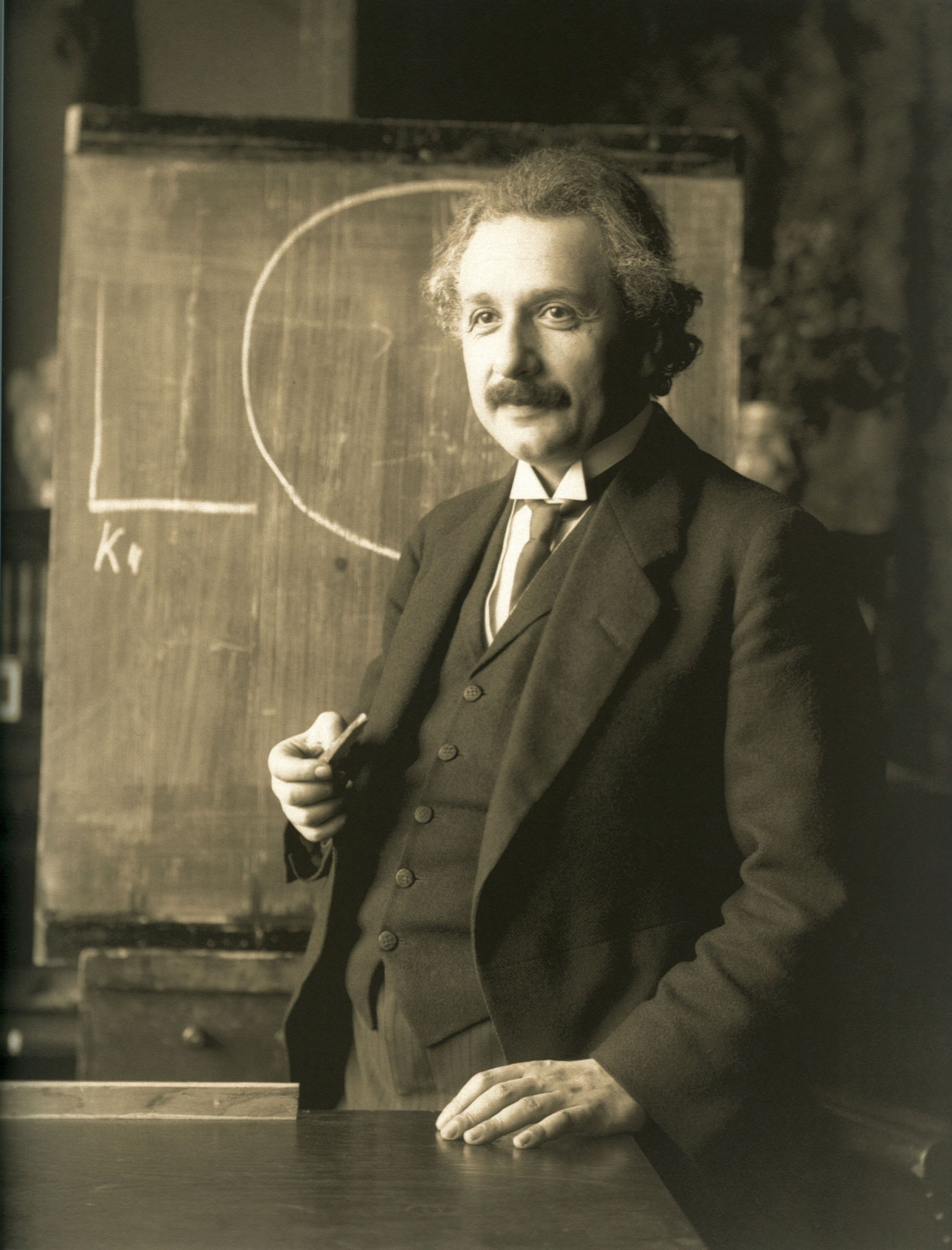
Albert Einstein, 1921.
The nineteenth century belonged to certainty. Science in that era was built on a foundation so sturdy it seemed almost self-evident. You started with an observation of something in the world, you developed theories that might explain what you were seeing, and then you designed an experiment to test your theories. Your theory became accepted only after another scientist could replicate that experiment under the same conditions with the same result following. This was both a methodology and a philosophy. And most importantly, it was a commitment to the idea that the physical world operated according to fixed, discoverable rules. And that the human mind, armed with careful instruments and patient observation, could uncover those rules one by one.
And it was shown to work in every field you applied it to. Chemistry advanced by watching reactions occur in controlled vessels. Thermodynamics emerged from studying steam, pressure, and heat in engines that men could touch and adjust and observe in real time. Biology catalogued the living world in specimens and dissections. Geology read the strata of the earth like chapters in a book. Optics demonstrated the behavior of light through prisms and lenses that any trained scientist could reproduce. Electromagnetism, perhaps the great triumph of the century, was painstakingly mapped by Michael Faraday through hands-on experiments before James Clerk Maxwell gave it elegant mathematical form. But even that mathematical form was understood as a description of something real since something had to have been observed before it was written down.
In 1926, Max Born wrote to Einstein explaining the new probabilistic interpretation of quantum mechanics. Specifically, he wrote that the wave function didn't describe a physical reality but instead a probability distribution for where a particle might be found. Einstein wrote back: "Quantum mechanics is certainly imposing. But an inner voice tells me that it is not yet the real thing. The theory says a lot, but does not really bring us any closer to the secret of the Old One. I, at any rate, am convinced that He is not playing at dice."
The words that dominated scientific discourse in this era evoked a sence of permanence and authority. "Certainty" meant that a given outcome would always follow from a given set of conditions. Basically, it meant we know this because we have seen it, and seen it again. And the world doesn't change its mind between Tuesday and Thursday. "Determinism" went even further. It was the philosophical position that every event in the universe is the necessary consequence of prior causes operating according to fixed laws. The French mathematician Pierre-Simon Laplace had articulated the purest version of this vision earlier in the century. He believed that an intellect that knew the position and momentum of every particle in the universe at any given moment could, in principle, calculate the entire future and the entire past. The universe, in this view, was not a place of mystery but a place of concealed information that could be revealed through persistent and systematic effort. "Reproducibility" was the practical test of all this. If your result could not be repeated under identical conditions by an independent hand, it wasn't science. The laws of nature, by definition, did not take days off. "Observable" was the foundational requirement beneath everything else. Science did not speculate about what it could not see, measure, weigh, or otherwise bring into the domain of the senses. Sure, devices like microscopes and telescopes were used to expand and amplify what we could observe, but they were always instruments in support of observation and not replacements of it. To say something was "empirically verified" was the highest possible endorsement. It meant that we didn't merely theorize this. We watched it happen.
This framework produced one of the largest disruptions in the trend of human progress. Instead of the small, sporadic advances that humanity was accustomed to over most of its existence, you saw improvements at almost every level across only a generation or two. The steam engine, refined by men who understood thermodynamics, reshaped economies. Vaccines, grounded in observable immune responses, began to tame diseases that had stalked humanity for millennia. The telegraph and eventually the telephone extended human communication across continents. The germ theory of disease transformed medicine from largely intuitive practice into a science of cause and effect. Bridges were built on mechanical principles so well understood that engineers could calculate load and stress with confidence. Chemists synthesized new compounds by understanding the rules of atomic combination. In every case, the scientific method was proving to be a progress method: observation led to hypothesis, hypothesis led to experiment, experiment led to confirmed law, and confirmed law led to reliable application. The world, observable experiment by observable experiment, was becoming more and more known.
Einstein’s legendary triumph with General Relativity convinced him that pure mathematical beauty could dictate reality without the messy help of laboratories. Consequently, he spent his final decades chasing an invisible, unobserved geometric ghost. At the same time, he criticized quantum mechanics for building frameworks without understanding or fully testing the foundational assumptions first. In a way, both Einstein and those pushing quantum mechanics became detached from the observation. They just detached in different ways.
The certainties of 19th century science began to unravel in the 20th century. The early tremors came from several directions. One of the more significant moves away from deterministic knowledge dealt with light. Max Planck, in 1900, found that he could only make his equations for thermal radiation work if he assumed that energy was emitted in discrete chunks he called quanta. This was very different from the position of light being a continuous wave. Albert Einstein, in 1905, extended the idea to explain the photoelectric effect, showing that light itself came in discrete packets, called photons. Photons behaved sometimes as waves and sometimes as particles depending on how you looked at them. The question about the seemingly inconsistent way light reacted in different situations led to the replacement of observable science to one built on probabilities. Niels Bohr applied quantum ideas--again, the varying properties of quanta's behaviors--to the structure of the atom. Werner Heisenberg, in 1927, formulated what became perhaps the most philosophically unsettling statement in the history of science, something he called the Uncertainty Principle. You cannot simultaneously know both the precise position and the precise momentum of a particle. The more precisely you determined one, the more indeterminate the other became.
The baffling obversation about light and how it seemed to behave in a seemingly unstandardized way is what led to the dominance of probabilities and math in the field of physics today. And since physics is, in the most basic view, the study of reality itself, its impact has logically extended to many other facets of human understanding and activities to include manufacturing and communications. But just because it took that turn, doesn't mean that it had to. Or, more controversially, that is was even the right path to take. Although Einstein came up with a corrected definition of light, it was still just a definitional change. The observable and testable scientific method of the 19th century was built on corrections. And what Einstein did was very much in that mold. He noted a difference in what was previously stated about light and he put forth a corrected view based on observation. It was others, however, that took that change and the observation of light acting seemingly randomly and applied it to a wider explanation of the universe--if light is random then the universe is too. But Einstein only noted that the new observations of light were different from previous statements and not necessarily that the behavior was random. Instead, he saw it as us simply not finding the rule for its peculiar behavior yet. Could it be that the shift from observations and deterministic rule-making into a world where the underlying assumption is that there are no universal rules be the reason why we've seemingly hit a roadblock in the advancement of physics and other sciences for many decades now?
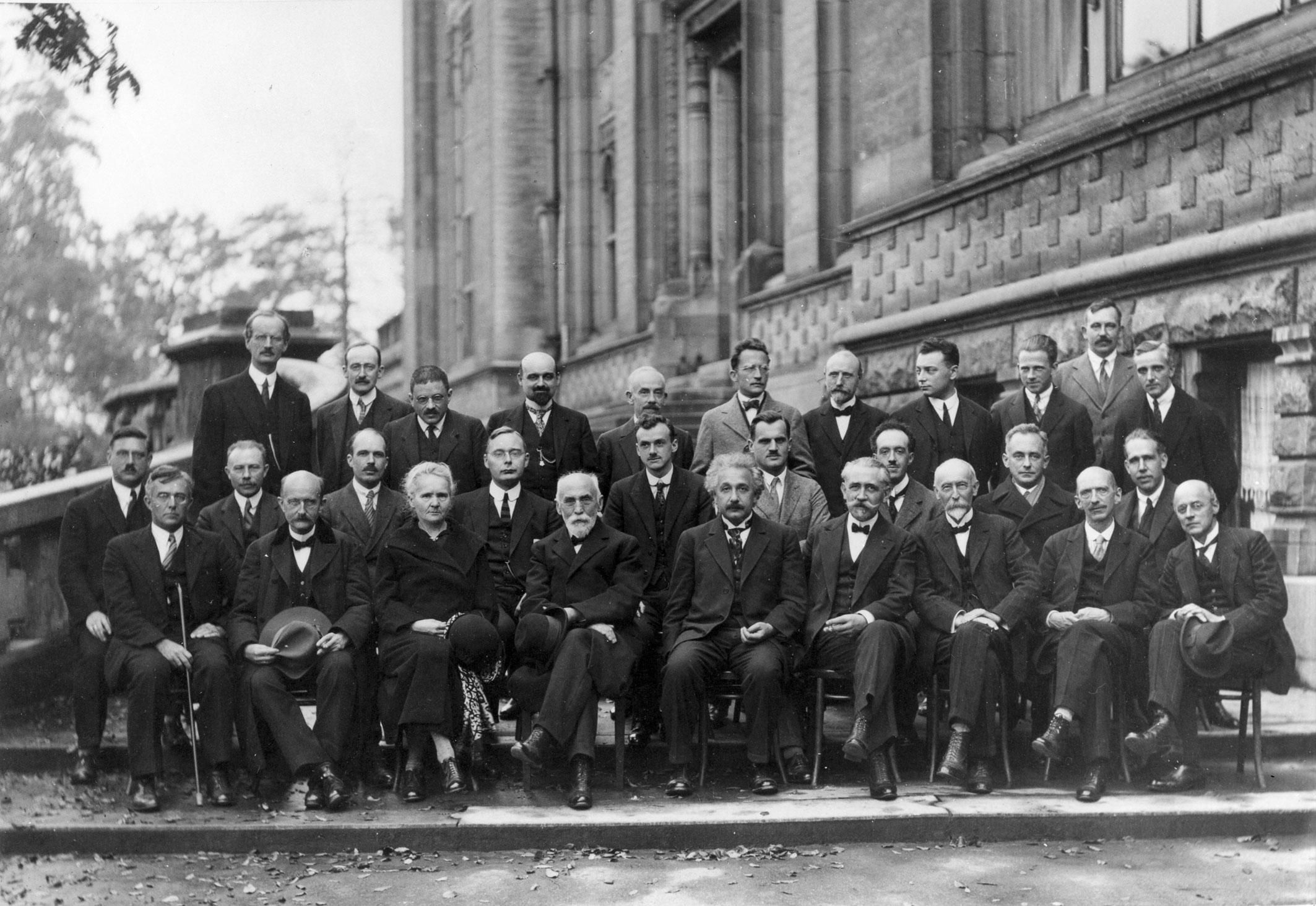
Solvay Conference, 1927. This was where the consensus that nature at the subatomic level is fundamentally probabilistic first took hold of science.
Although people point to faster computer processors and more efficient energy systems as a sign that we made the right call scientifically, that doesn't necessarily prove the point one way or the other. In many ways, some of the most celebrated advances we've experienced technologically over the last 70 years have really been just optimizations of existing knowledge instead of genuine breakthroughs in understanding. Take the transistor, which is the foundational building block of every modern processor and digital device, for instance. That was not born from quantum probability theory, but instead from the deterministic study of how specific materials conduct electricity under specific conditions. Although quantum mechanics provided a mathematical framework that described the behavior of electrons in semiconductors, the engineers who built the first transistor at Bell Labs in 1947 were working from observable and testable material properties. Similarly, the laser, which is often cited as a triumph of quantum physics, operates on principles that Einstein himself described in 1917. This was stimulated emission and it was stated decades before the Copenhagen Interpretation of probabilistic uncertainty had hardened into orthodoxy. What we have largely done in the intervening decades is take the genuine discoveries made at the boundary of classical and quantum understanding in the early twentieth century and simply make them more efficient. The important thing for our analysis is to identify what we haven't done. In many cases we never went back to resolve the foundational questions about what is actually happening physically that Einstein and others left open on the table. Einstein simply saw the questions as rules that we didn't discover yet. The scientific consensus said Einstein was wrong and that some things are just probabilities. Either way, science isn't certain anymore.