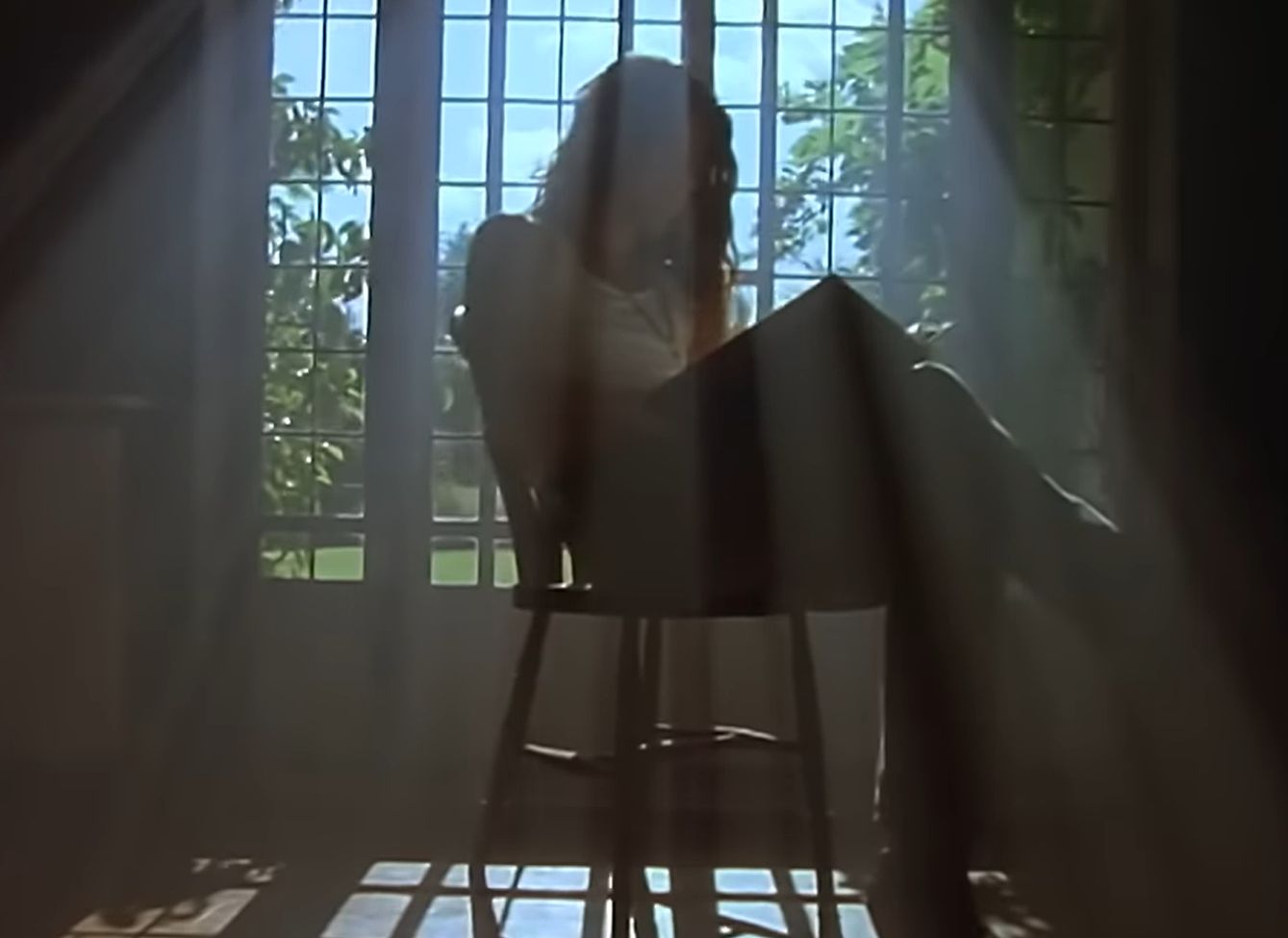
The lead singer of When in Rome in a still from their music video for "The Promise."
"The Promise" by the British band When in Rome was released in September 1987 in the United Kingdom and the next September in the United States. The song was the band's debut single and written by all three of the band's members. They wrote it in a shed turned make-shift studio at the house of one of the band member's father. From an interview published in 2011 on the Kickin' it Old School blog, the band member Clive Farrington explained that the song took two days to finish since melodies would come to him when he would lay down to sleep. He would get up and sing them in a tape recorder to remember what he seemingly dreamt up.
The song starts off with a piano melody that then leads into a synthesizer pop beat. This is followed by a mantra that starts the vocals and repeats throughout the song insisting on a promise to be kept. But we have more than just the sound to give us a window of meaning into the song since it was released during the era of the music video. It seems strange to talk about music videos in the past tense since they were plastered everywhere for over three decades and seen as essential if a band wanted to be seen as a commercial success. The music video as a genre began its long decline in the early 2000s when the most prominent home for them began shifting to "reality" tv shows such as The Real World, Cribs, and The Osbournes. In October 2025, MTV announced it would be shutting down all of its music-only video channels such as MTV 80s and others. The main MTV channel remains, but it's not really a music channel anymore.
Thomas Edison said his best ideas came to him right before falling asleep. Regularly, he would fall asleep sitting up in a chair while holding ball bearings. While falling asleep, his hands would let go of the ball bearings and they would hit the floor and wake him up. He then quickly wrote down his thoughts before he forgot.
But getting back to When In Rome, their video for "The Promise" makes it seem like the song is about a forlorn love interest, particularly with the frequent juxtaposition of visuals between the lead singer in an empty room and an attractive brunette in an empty house. However, if you just listened to the lyrics, they allude to something more general and more universal. And it's clear from the outset with the initial words sung almost as reassurance--"If you need a friend, don't look to a stranger." The cadence and tone of the song seems different from something you would expect if it was just a love song.
It's indeed a catchy tune but it's an anomaly in many ways. First, it was the only true hit of the band. And it's clear that there was something different about it compared with the other songs on their debut album. Don't get me wrong--those other songs are well produced. But they almost feel forced. "The Promise" seems like something that was simply meant to be, almost effortless. After all, most of it came to them from a dream. I will note that one of the other songs on the same album comes closer to this type of quality--"Heaven Knows." But's it's only comparatively closer than the others, and not necessarily in the same orbit as "The Promise." But there's something else that makes "The Promise" an anamoly and it has to do with the larger shift in music taking place in the late 1980s. But it's a shift that was only evident after "The Promise" came out. In other words, the significance of "The Promise" is seen only in retrospect.
"The Promise" was featured in the 2004 movie, Napoleon Dynamite. It played in the final scenes as Napoleon...(did you really think I would give details about the end of the movie and be a spoiler?)
When in Rome is viewed by most as a "New Wave" band. New wave, as a music genre has its start in the late 1970s with British bands experimenting with electronic keyboards and synthesizers to produce their songs. Some attribute the term new wave as being used to describe a musical form via a cinematic analogy, particularly borrowing from the French New Wave cinema label, since both the motion pictures from France and the emerging musical form in the UK both shared an edgy, non-mainstream architecure. For me, I've always understood the term as most Americans do since the genre seemed like an invasion. And a second round of an invasion at that. This meaning was widely understood in American mainstream analysis like Nicholas Schaffner's 1982 book, The British Invasion: From the First Wave to the New Wave where he traced the 1960s era of The Beatles and The Rolling Stones coming to America with the later era of bands like Joy Division.
Although it wasn't noted at the time and perhaps I might even be alone to see it this way, "The Promise" was the swan song of New Wave. For over a decade, New Wave had pounded its way into America's radios and theaters. It permeated pop culture and provided the soundtrack for the 1980s social scenes in malls across the country. But the pure, edgy works of New Wave couldn't conquer an America that learned the importance of standardizing and mass producing for a diverse country of over 200 million people. A country as large as America ultimately finds a middle ground that can work just as well in Topeka, Kansas, as it can in grungy bar scenes of New York City.
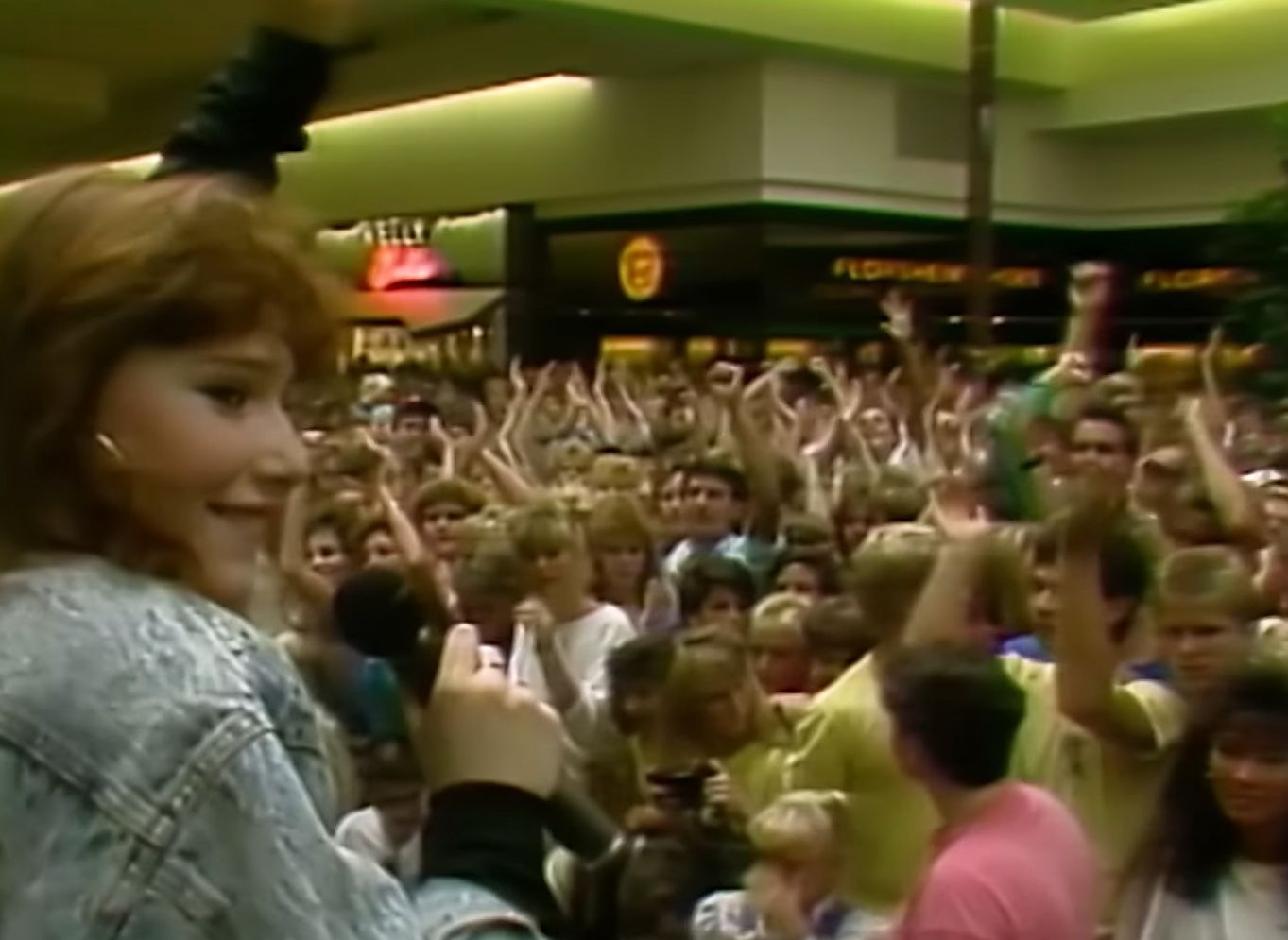
The singer Tiffany performing at a mall in the late 1980s.
It took time, but the New Wave invasion turned into an assimilation of an American form. To put it simply, the invaders were turned American. "The Promise" has a synth pop beat and bitter sweet lyrics. But few people realize that New Wave didn't start that way. After all, it began as edgy and almost depressive in its expression. America took it and rounded off the edges. Depressive turned into bitter sweet. Raw expression turned into carefully crafted popular music almost infectious in its catchiness. But even that nuance eventually was overtaken by songs that were produced more like a factory product than a song. You already started seeings signs of the corporate productions by the time "The Promise" came out with bands like New Kids on the Block and solo acts like Tiffany. The meaning behind a song became less important than its marketability. "The Promise"--the song itself--ended with a trailing off like how you turn off a bedroom light with a dimmer by reducing the brightness until it completely clicks off. It's a smooth, controlled ending. And that's exactly how New Wave ended.