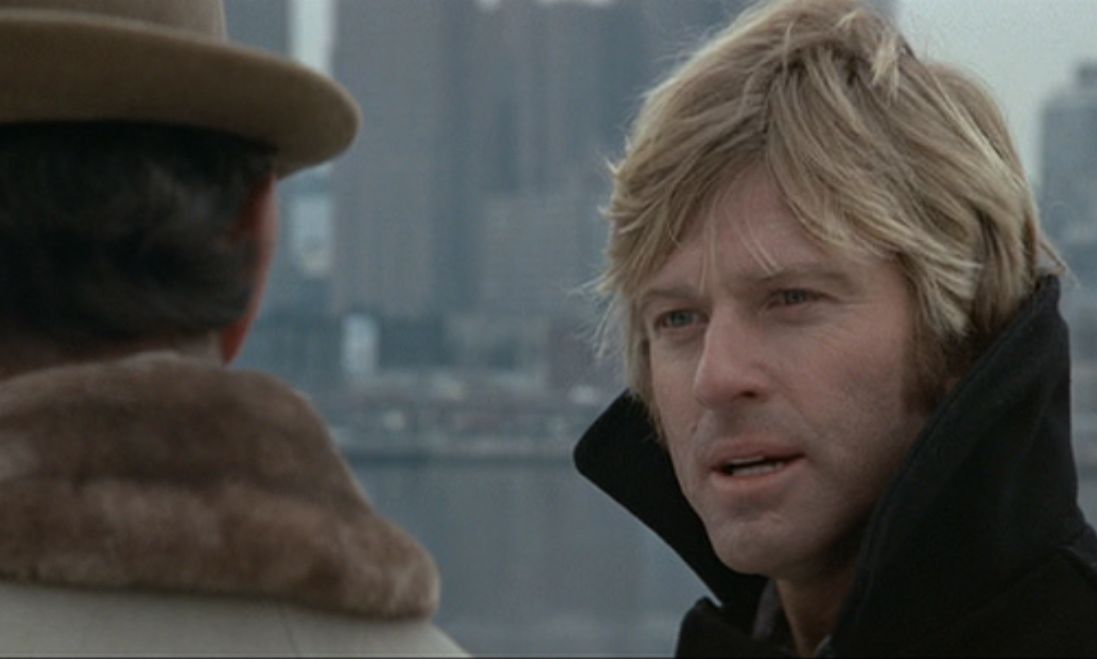
Robert Redford as Joe Turner in Three Days of the Condor
Robert Redford is known for alot of movie roles but probably one of the more obscure roles was as Joe Turner, a bookish CIA analyst in Syndney Pollack's 1975 film Three Days of the Condor. I found it in the bargain DVD rack for five bucks at a chain store that still carries those sorts of things. If you haven't seen the movie, I suggest you stop reading now and go watch it before coming back since I'll be discussing the plot from this point forward. Turner is a novelist working at a CIA station in New York that is disguised as a literary society. Robert Redford's character and his colleagues basically read novels, journals, and other open source materials to compare with potential real-world events to presumably discover threats and leaks. Needless to say, drama unfolds and Turner finds himself on the run not knowing who he can trust.
Former CIA Director Richard Helms, who was serving as Ambassador to Iran at the time, met with Robert Redford on the set and provided advice and coaching for the role.
The visuals of New York City in the mid-1970s is like visiting a different world. Although many think of the 1970s as a chaotic and messy time with New York City being particularly trash-filled and crime-ridden, the sprawling metropolis in the film is eerily pristine and orderly. It's quite striking when you think of the stereotypes and see how the visuals on screen show something so different. There's also a sense of permanance. In one scene, Turner is in a telephone switching station physically plugging in telephone company equipment to access a phone number and gather information. With shots of the tall rectangular duo structure of the World Trade Center in various shots, there's a reminder of what else doesn't physically exist anymore. I never thought I would find the 1970s an attractive time period, but inhabiting that world for the 118 minute run-time made me wish the movie lasted much longer.
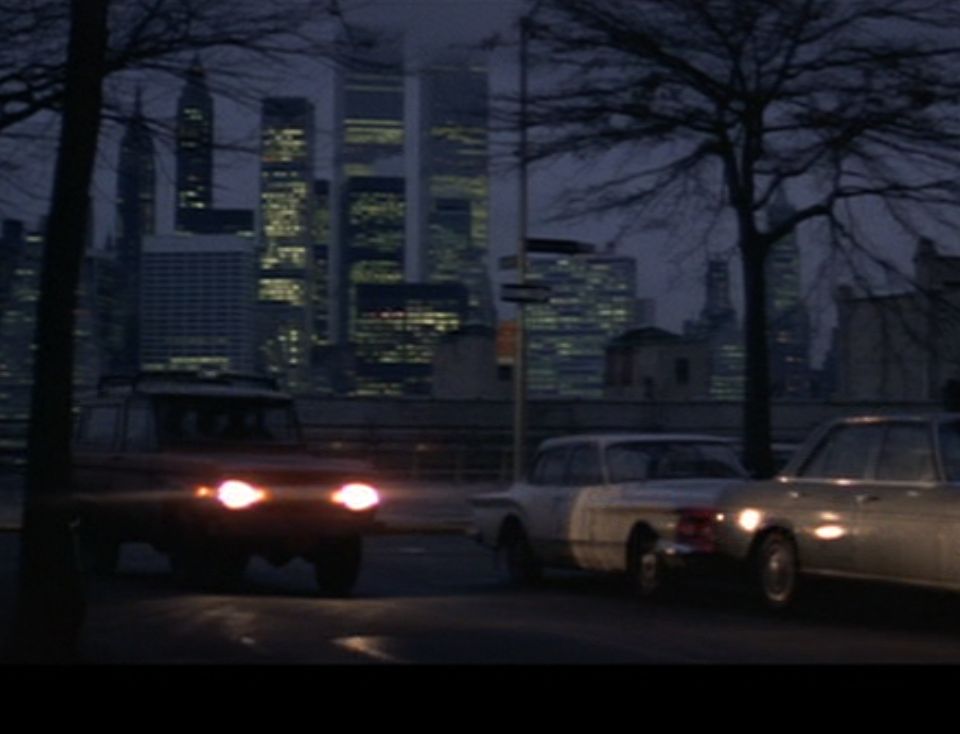
Scene from Three Days of the Condor of 1975 New York City in the background.
But of course, the movie goes beyond scenary and actually touches on larger anxieties in 1970s America. Watergate, the scandal involving the Nixon Administration and intelligence operatives spying on political rivals and journalists had been brewing for a number of years by the time the movie was released. The Church Committee, the Senate Committe that investigated illegal activities of the CIA and other agencies, was in full swing by the time Three Days of the Condor made it to theaters in September 1975. As with real life, the movie portrayed a complex and often impenetrable web of interests and groups. In one scene, Redford's character is talking with a confidant and is asked about a contact and whether or not he can be trusted. He answers by simply asking a question posed as a hypothesis: "Maybe there is another CIA inside the CIA."
Three Days of the Condor was the only movie ever filmed at the World Center.
It's a sophisticated and well-paced movie. However, I did find the romance scene between Redford's character and Faye Dunaway's character to be unrealistic and something that detracted from the film. Otherwise, the overarching disillushionment with institutional corruption and duplicity that was well established by 1975 unfortunately holds up well to our current reality. I'd much rather the institutional failings and opacity prevalent in the film be the thing that no longer exists. Instead, the physical reality of the 1970s has moved into the digital and opaque world of today. In 1975, a phone call went through and a computer performed on command regardless of who punched in the code. Now, corporations can block communications like texts and internet posts; and there are legislative efforts to put age verification (which would actually equate to identify verification) as requirement just to use an operating system. So in a way, I guess Three Days of the Condor can be viewed as a comfort movie in some respects.