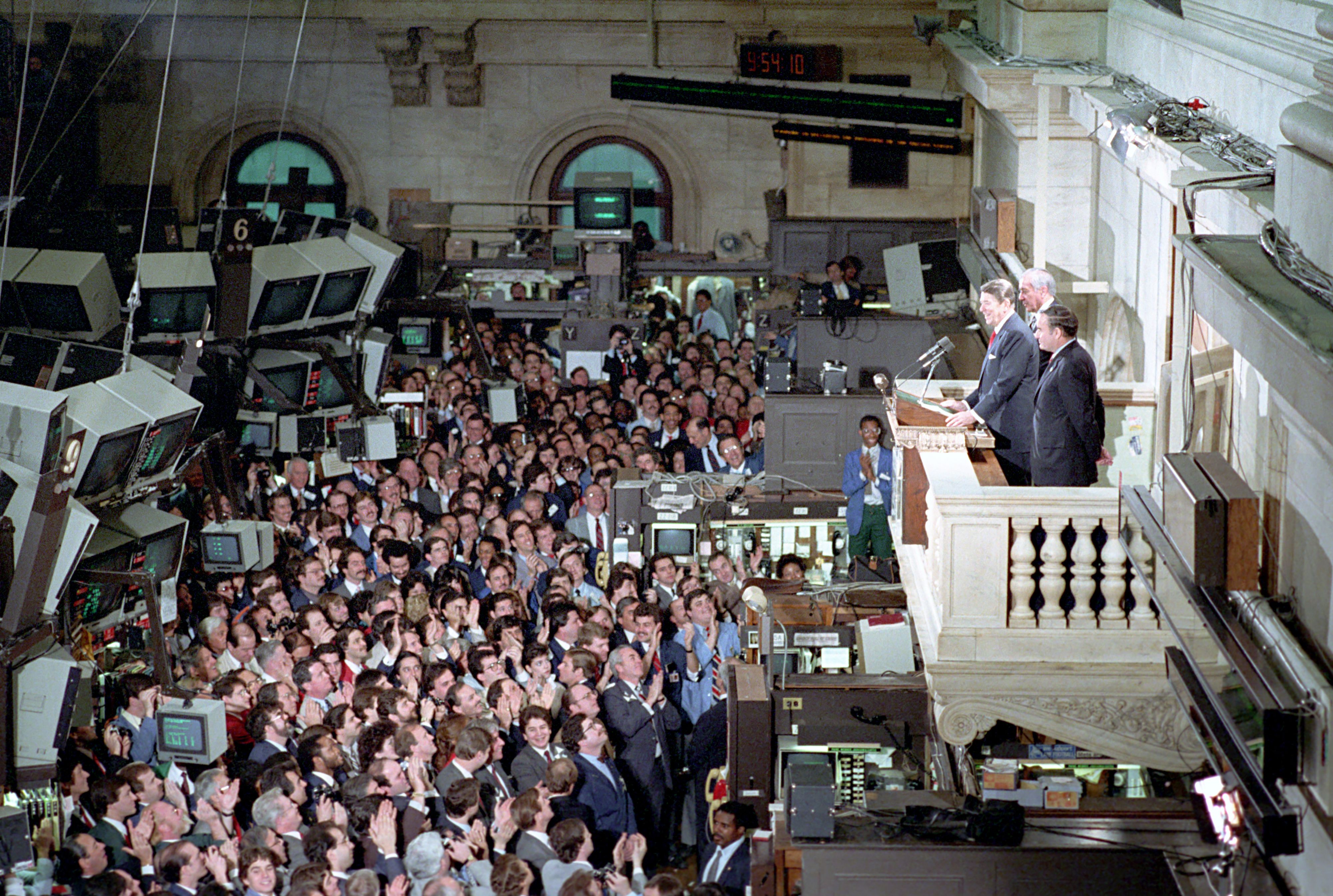
Ronald Reagan at the New York Stock Exchange.
The overarching view of business success in America has come to treat the "exit" — an IPO or a sale of the company to outside investors — as the defining marker of entrepreneurial success. This is far different from what had been the traditional American ideal involving building a profitable, owner-operated enterprise that you continue building on with perhaps even handing it off to your children. The current "exit" success message is pushed in most of the mainstream books you find in the business section of your local bookstore. From John Warrillow's Built to Sell to Peter Thiel's Zero to One, they frame success in terms of building a company that scales to a massive valuation, implicitly for sale or public offering.
Most of the "top-tier" business schools reinforce this same measure of success. Stanford's Graduate School of Business built much of its entrepreneurship curriculum and extracurricular culture around Silicon Valley's venture-funded, exit-oriented startup model. Harvard Business School's case-method teaching frequently centers on companies at the moment of acquisition, IPO, or private equity buyout as the "success" event in a founder's story. Pop culture completes the loop with ABC's Shark Tank, where hard-working, entrepreneurs feel they need somebody else with money to certify whether or not their business is good or not. You can't even escape it in video games with pixalated depictions of the business "exit" in titles like Startup Company.
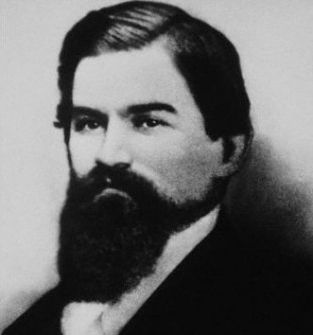
John Pemberton, the founder of Coca-Cola.
I know some may be reading this and point out that many entrepreneurs that sell out get paid very well. And some even go on to found new companies. And that's true. But only for some. There are many that sell out well below what their company is actually worth. A good example of this is actually a very old one. John Pemberton invented Coca-Cola in 1886. Instead of him or his son holding on to the company and building it up themselves, they sold their last share of the company for only $300 to a fellow pharmacist named Asa Candler. Candler then built the company to a national brand with the Pembertons watching what could have been.
But the worse part of selling out is not about the success that comes to others through the company that was sold. Rather, it comes from the success that the buyers get from being able to run their new asset into the ground. One of the least talked about aspects of the buy-outs that happen in business is what I call, "buy to bind." Many companies with lucrative and well established business models or products will actively look for competitors with an inherently better product in some way that they know is a threat to their business model. Since many of these are emerging with little cash and founders just starting out, they'll come in with what seems like a fortune along with promises to allow them to keep building up the product. But once the bigger fish acquires the little fish, that bigger fish builds a small pond to keep the little fish in and slowly drains it. If you look past the "feel good" headlines and read some of the biographies of those who were the little fish, you'll come across the same pattern of the entrepreneurs getting loads of money and promises only to see their innovative idea wither away within the new owner's business until that founder eventually leaves physically leaves completely. This happened with companies like Dodgeball (2005) and Sparrow (2012) with Google the acquirer; and Flickr (2005) with Yahoo being the big fish.
Kentucky Fried Chicken founder Colonel Sanders sold his company in 1964 for $2 million and a lifetime salary. He spent his remaining years publicly criticizing the new owners for changing his recipe and cutting corners on quality.
The experts, the mainstream books, and pop culture are telling you to sell your business to succeed in business. Perhaps another voice is a more useful frame for understanding what is best in business. Although he's an investor, Warren Buffett's well known philosophy to "buy and hold" can be instructive for entrepreneurs building products and businesses. But instead of buying and holding, perhaps the new mantra should be to build and hold. It definitely sounds more respectable than selling out at least.