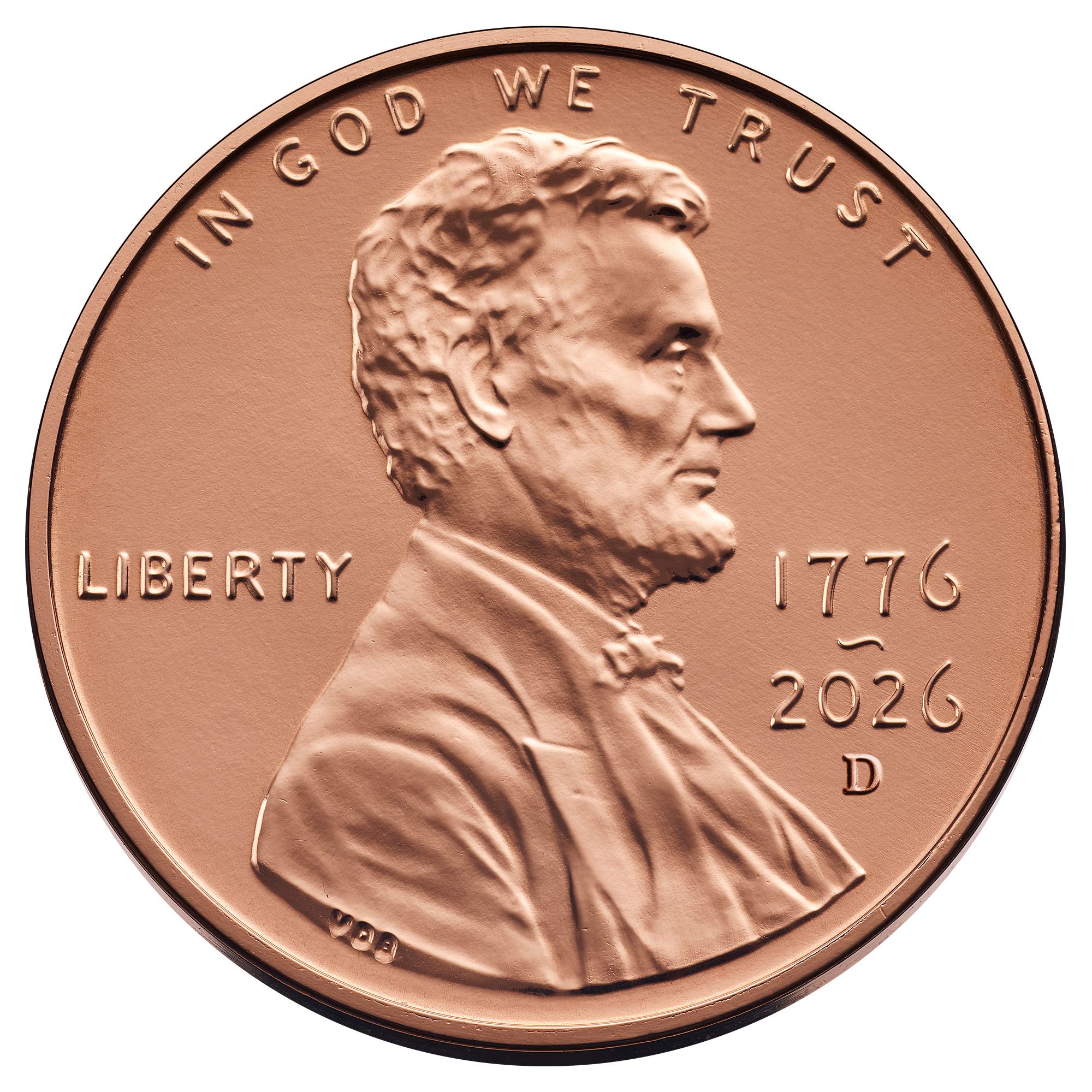
A 2026 penny.
Many people think America's one-cent coin is gone for good. In May 2025 the U.S. Mint placed its final order for penny blanks with Artazn LLC in Tusculum, Tennessee, and when those blanks ran out, production stopped. The Mint held a ceremonial strike at its Philadelphia facility on November 12, 2025, where U.S. Treasurer Brandon Beach struck the last circulating one-cent coin, supposedly closing a 232-year run. The sequence began with a social media post on February 9, 2025, when President Trump wrote on Truth Social that he wanted to stop minting the penny. On February 18th, Treasury Secretary Scott Bessent stated the Mint would stop production. Treasury's stated rationale was cost. Production costs had risen from 1.3 cents to 3.69 cents per penny over a decade, and the Mint projected that stopping production would save $56 million. Since then, registers across the country have gone penniless. Companies like Home Depot, PetSmart, Burger King, McDonald's and Kwik Trip are among those posting rounding policies. And widespread public impression has taken hold that the penny is simply gone. But it's not--at least not yet.
The law is narrower than the headlines. Under Public Law 97-258 from 1982 (96 Stat. 980), the Secretary "shall mint and issue coins described in section 5112 of this title in amounts the Secretary decides are necessary to meet the needs of the United States." That clause governs quantity only. It doesn't give the Treasury Secretary or anyone else the ability to remove a coin from existence. And that's where the disconnect is between public perception and the law. In the public interviews, the Administration emphasizes the costs and says they've minted the last penny. But if you look at what was stated officially, there is more nuance. The US Mint stated the position as a suspension and not an end. And that's because they can't end it without Congress no matter how much they want the public to believe it's done for good. But the premise that there was no need and thus the Secretary could suspend the coin fell apart almost immediately. If there were no demand, there would have been no shortage within months of the announcement. By early October 2025, 41 of the Federal Reserve's 165 coin terminals had stopped handling pennies. And that number only grew. Collectors reported copper cents disappearing quickly after the news, precisely as they did when the Treasury Department made a similar announcement back in 1974.
The dual-dated "1776 ~ 2026" Lincoln cent exists only in official Mint sets. For the first time in modern history, the Lincoln cent is a collector-only coin. The 2026 Uncirculated Coin Set was capped at 300,000 units and sold out in about 24 hours at $124.50. It later traded on the secondary market for over $180.
The usage data also shows the demand for the penny as high and the coin being used widely. In Fiscal Year 2024, the Mint produced roughly 3.2 billion pennies. About eight in ten U.S. adults reported recently using cash in a 2024 Federal Reserve survey. A February 2025 survey found only about 36% favored elimination of the penny with just 15% strongly in favor. Surveys commissioned by Americans for Common Cents in 1990 and 2012 found roughly two-thirds of Americans wanted the penny kept. People pick them up for luck, save them from birth years, and fill jars with them. The penny is used daily and obviously well liked by most, if not beloved. But that doesn't mean the penny doesn't have enemies. In fact, there are some very strong groups that would prefer the penny to no longer exist.


So who wants it gone? First, there's the digital-payments interests to include credit card companies and other digital payment processors. They have been very clear about their opposition to the penny. And it's not hard to see why since they make money on every single swipe of the card. If you use cash, there is no cut to a middleman. It's a transaction that is between you and whoever you're paying. And it's not just money flowing from the consumer. U.S. retailers pay roughly $170 billion annually to process card transactions. And swipe fees are estimated to raise consumer prices by $1,200 to $1,800 a year for the average family. But another group against the penny are banks. Through the past two decades, more and more of the money banks make come from interchange fees charged in digital transactions rather than traditional deposit banking. Then there are those who want the copper. Pennies struck before 1982 are 95% copper with those struck after are copper-plated zinc with 97% being with less than 3% being composed of copper. At recent copper prices, 147 pre-1982 cents hold roughly $5 in metal. Melting and exporting cents remains prohibited under Federal Law, but hoarders are stockpiling on the belief the ban will fall. And if the penny does actually get discontinued, then the odds of the rules against melting would end. There's another group, but we'll look at them when we look at where things stand in Congress.
The Mint struck over 1 million aluminum cents in 1974 and distributed samples to House and Senate Banking Committee members. Vending interests warned the lighter coin would jam machines. And pediatricians and radiologists warned X-rays might not detect one swallowed by a child. Congress rejected it. Mint Director Mary Brooks later asked for all the samples back. It's reported that a dozen were never returned.
The Common Cents Act (H.R. 3074) passed the House by voice vote on July 14, 2026. The bill, if passed in the Senate, would end penny production permanently. It was received in the Senate on July 15 and referred to the Committee on Banking, Housing and Urban Affairs, where no hearing or markup has been scheduled yet. And this is where the last group working against the penny comes in. The bill's four sponsors are Representatives Lisa McClain (R-Mich.) and Robert Garcia (D-Calif.), and Senators Cynthia Lummis (R-Wyo.) and Kirsten Gillibrand (D-N.Y.). The two senators are also Congress's biggest crypto-legislation partnership with them co-authoring the Lummis-Gillibrand Responsible Financial Innovation Act and the Lummis-Gillibrand Payment Stablecoin Act. Lummis, dubbed the "Bitcoin Senator," has held bitcoin since 2013 and drafted the BITCOIN Act to build a federal strategic reserve. She chairs the Senate Banking Subcommittee on Digital Assets, which is the same committee where the penny bill now sits. Supporting these efforts is a group called Fairshake, which is a crypto super PAC. Many within the crypto community have called for the end of cash for years. Getting rid of the penny would make cash transactions more costly since you would not be able to provide exact change. And to many people, every penny counts. Anyone who wants it saved should call their Representative and both Senators to let them know where you stand. I cover this issue more in depth in a Plain Meaning episode entitled, Why the Penny Still Matters.